Sacred terrain medicine for the whole body. Homeopathy, Bach Flowers, healing wisdom and more.
Tallow & the Skin Terrain: Why Your Great-Grandmother Was Right
The ancient food medicine that modern skincare forgot, and why the terrain of your skin has been asking for it.
NATURAL HEALTH & IMMUNE TERRAIN
4/29/20268 min read
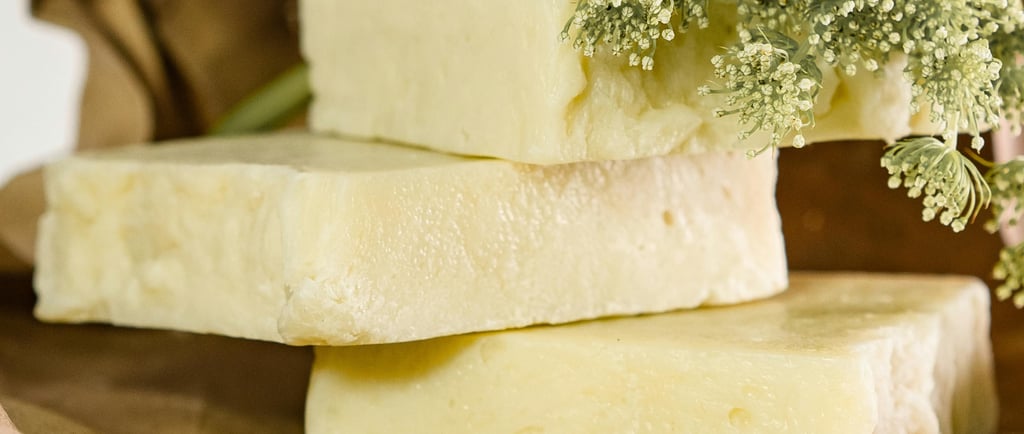
Before the age of synthetic creams, laboratory serums, and forty-step skincare routines, women kept their skin soft, supple, and resilient with something that came directly from the land. Rendered animal fat. Simple, ancient, and profoundly effective. It was not a trend. It was not a wellness movement. It was simply what worked.
This is not an article that will ask you to throw away everything in your bathroom cabinet. It is an offering of something more useful: an honest look at why tallow, rendered beef fat, particularly from the suet of grass-fed animals, is one of the most skin-compatible substances in the natural world, why it fell out of favour, and why so many people are rediscovering it as the terrain of their skin finally gets what it has quietly been asking for.
I have observed this pattern again and again in my decades of working with the healing terrain. The oldest tools are often the most intelligent. Not because ancient people knew more than we do. But because they had not yet replaced what works with what sells.
Understanding the Skin Through the Terrain
The skin is not simply a surface. It is the body's largest organ; a living, breathing terrain that reflects everything happening beneath it. It is a barrier, a detoxification pathway, a communication system, and a mirror of the internal terrain all at once.
When the skin terrain is healthy, it maintains a delicate balance of oils, moisture, and microbial life that protects it from the outside world while remaining supple and resilient from within. When that balance is disrupted by harsh cleansers, synthetic ingredients, nutritional deficiency, or internal toxic load, the skin speaks its distress in the only language it has. Dryness, inflammation, breakouts, eczema, premature ageing, sensitivity.
From the terrain perspective, we do not simply ask how to moisturise the skin. We ask what the skin actually needs to maintain its own intelligence. And the answer, increasingly, points back to something our ancestors never questioned: the fats that are most structurally similar to the fats our own skin produces.
That is where tallow enters the conversation.
What Tallow Actually Is
Tallow is rendered beef fat, traditionally sourced from the suet, the dense, white fat that surrounds the kidneys and loins of the animal. When rendered slowly at low heat, suet becomes a clean, stable, long-lasting fat with a nutritional profile that is remarkably compatible with human skin biology.
It fell out of favour in the 20th century for two reasons. First, the rise of the vegetable oil industry, which aggressively marketed plant-based fats as the modern, healthy alternative. Second, the industrialisation of skincare, which replaced simple, effective ingredients with complex formulations that could be patented, marketed, and sold at premium prices.
What was lost in that transition was something genuinely valuable. A fat that the skin recognises. A fat that does not simply sit on the surface but absorbs deeply, communicates with the skin's own sebum, and delivers nutrients directly where they are needed.
Why Tallow Is So Uniquely Compatible With Human Skin
The sebum that your skin naturally produces is composed largely of triglycerides, fatty acids, and fat-soluble vitamins — a profile that is remarkably similar to the fat composition of beef tallow. This is not coincidence. It is biological compatibility.
Tallow is rich in stearic acid, oleic acid, palmitic acid, and conjugated linoleic acid (CLA). These are the same fatty acids that form the building blocks of healthy human cell membranes. When applied to the skin, tallow does not block pores or coat the surface with an artificial barrier. It absorbs. It communicates. It replenishes what the skin has lost.
Beyond the fatty acid profile, high-quality grass-fed tallow is rich in fat-soluble vitamins that directly support skin health. Vitamin A supports cellular renewal and collagen synthesis. Vitamin D supports immune regulation and skin barrier function. Vitamin E is a powerful antioxidant that protects against oxidative damage. Vitamin K supports circulation and reduces the appearance of dark circles and bruising.
These are not synthetic additives. They are present in the fat itself, bioavailable in their natural form, and delivered to the skin in a medium it already understands.
How to Use Tallow for the Skin Terrain
Tallow is one of the most versatile skin medicines available. It can be used on the face, body, lips, hands, and areas of skin that are inflamed, cracked, or compromised. A small amount goes a long way; the skin absorbs it readily and does not need large quantities to feel the effect.
For the face: warm a very small amount between your fingertips and press gently into clean, slightly damp skin. It absorbs within minutes and leaves no greasy residue on skin that genuinely needs it.
For dry or compromised skin: apply generously to areas of eczema, psoriasis, cracked heels, or extremely dry patches. The fat-soluble vitamins and fatty acids create a deeply nourishing environment for skin repair.
For general body use: use after bathing while the skin is still slightly warm. Tallow spreads easily and absorbs beautifully, leaving skin soft without the synthetic fragrance and chemical load of commercial body lotions.
For babies and sensitive skin: tallow is one of the gentlest skin applications available, free from the synthetic preservatives, fragrances, and emulsifiers that are present in almost every commercial baby product.
How to Make Tallow at Home
Rendering tallow at home is simpler than most people expect. The result is a pure, clean fat that you know exactly what went into, and nothing else.
What you need: raw beef suet from a trusted butcher or farm, sourced from grass-fed and grass-finished cattle. Ask specifically for kidney suet, which is the purest and most stable.
The process: cut or grate the suet into small pieces and place in a heavy-bottomed pot or slow cooker over the lowest possible heat. Low and slow is essential; high heat damages the fat and reduces its nutritional value. Allow the fat to melt and render over several hours, stirring occasionally. When the solid pieces have shrunk and become crispy (these are called cracklings), strain the liquid fat through a fine mesh or cheesecloth into clean glass jars. Allow to cool. The rendered fat will solidify into a beautiful, pale cream or white tallow.
Stored in a sealed glass jar, tallow keeps at room temperature for several weeks, in the refrigerator for several months, and in the freezer for up to a year.
What to Look for When Purchasing Tallow
If you are not making your own, the quality of purchased tallow matters enormously. Not all tallow is created equal, and the difference between a commercially rendered product and a carefully sourced, traditionally rendered fat is significant.
Look for: grass-fed AND grass-finished. Grass-fed alone is not enough; many cattle are grass-fed for part of their lives and finished on grain. Grass-finished means the animal ate grass its entire life, which directly affects the fatty acid profile and nutrient density of the fat.
Look for: suet tallow specifically. Tallow rendered from suet (kidney and loin fat) is purer, more stable, and more nutritionally dense than tallow rendered from other parts of the animal. Ask your supplier specifically whether their tallow is suet-rendered.
Look for: slow-rendered at low heat. Heat damages fats. The best tallow is rendered slowly, never rushed, preserving the integrity of the fatty acids and fat-soluble vitamins. Ask your supplier about their rendering process.
Look for: single ingredient. Pure tallow contains one thing: rendered beef fat. Nothing else. No added oils, no preservatives, no fragrances, no emulsifiers. If the ingredient list contains anything other than tallow or beef tallow, put it back.
Look for: glass packaging. Tallow stored in plastic absorbs compounds from the packaging over time. Glass is the only appropriate storage vessel for a pure fat product.
Look for: regenerative or local sourcing. Small farms practicing regenerative agriculture are your best source of genuinely high-quality tallow. Local butchers who source from known farms are another excellent option.
What to avoid: commercially rendered tallow, hydrogenated tallow (which alters the fat structure entirely), any product with added ingredients, and anything sold in plastic containers with a long shelf life achieved through preservatives rather than purity.
If you are unable to source locally, a trusted grass-fed tallow option is available through iHerb. Find it on iHerb (affiliate link — I only recommend what I trust)
The Emotional Terrain of Skin Nourishment
There is something worth pausing on here that goes beyond the chemistry.
The act of applying tallow to your skin is an act of nourishment. Not maintenance. Not prevention. Nourishment. And for many people, particularly those who have spent years at war with their skin — trying to control it, correct it, minimise it — the shift to simply feeding it is more significant than it might appear.
The skin is deeply connected to our sense of being held, protected, and cared for. In the Bach Flower tradition, people who neglect their own physical needs, who find it easier to nourish others than themselves, who carry a subtle sense of being undeserving of care, often find that even the physical act of applying something as simple and ancient as tallow carries an unexpected emotional weight.
If that resonates with you, the following remedies may support the deeper terrain beneath the skin:
BACH FLOWER SUPPORT FOR THE SKIN AND SELF-NOURISHMENT TERRAIN
Crab Apple: for those who feel self-conscious about their skin, who fixate on perceived imperfections, or who carry a sense of contamination or impurity about their physical body.
Centaury: for those who find it easier to care for others than themselves, who neglect their own nourishment and tend to put their physical needs last.
Larch: for those who lack confidence in their own body, who have been told their skin is a problem to be managed rather than a terrain to be understood and nourished.
Rock Water: for those who are rigid and demanding of themselves, who push through discomfort rather than allowing themselves the simple pleasure of being cared for.
Willow: for those who carry resentment or bitterness about their skin, who have struggled with skin conditions for years and carry the emotional weight of that struggle in their body.
A personal Bach Flower combination chosen specifically for your emotional terrain will always be more powerful than individual remedies used in isolation. If you would like a personalised combination created for your unique terrain, the Sacred Terrain Consultation at CURA Detox offers exactly this.
The Sacred Truth About Tallow
Your great-grandmother did not need a clinical trial to tell her that tallow worked. She could see it, feel it, and watch it work on the skin of everyone around her. The wisdom was passed down not through research papers but through practice, observation, and the quiet confidence of generations who knew what their bodies needed.
We have spent decades replacing that wisdom with synthetic alternatives that are cheaper to produce, easier to patent, and far more profitable to sell. And in doing so, many people have ended up with skin that is more reactive, more sensitive, and more dependent on products than ever before.
The return to tallow is not a step backward. It is a step toward something the skin has been waiting for. A substance it recognises. A fat it can speak to. A nourishment it understands at the cellular level.
Sometimes the most sacred act of healing is simply giving the body what it already knows how to use.
If you would like personalised guidance on supporting your skin terrain from the inside out, including dietary recommendations, drainage support, and a Bach Flower combination chosen for your specific patterns, I invite you to explore the Sacred Terrain Consultation at CURA Detox.
Important: This article is offered as educational information in the tradition of natural healing and is not intended to diagnose, treat, or replace the advice of a licensed medical professional. Always work with your healthcare provider before making changes to your treatment plan.
Created by Yvonne Meyer, Founder of CURA Detox, curadetox.com
Detox made sacred. Healing made Yours.
© 2026 CURA Detox. All rights reserved.