Sacred terrain medicine for the whole body. Homeopathy, Bach Flowers, healing wisdom and more.
Oxalate Terrain: When Good Foods Become a Hidden Burden
Oxalates are in some of the healthiest foods on the planet. For some terrains, that is exactly the problem.
6/4/20267 min read

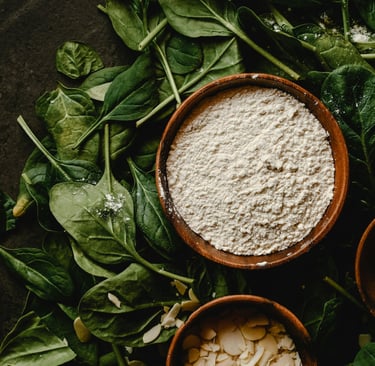
Spinach. Almonds. Sweet potato. Beets. Dark chocolate. These are foods celebrated in every corner of the natural health world, and for good reason. They are rich in nutrients, antioxidants, and fibre. For many people they are genuinely nourishing. But for a specific terrain, a terrain that cannot properly process oxalate compounds, these same foods can become a quiet and persistent source of inflammation, pain, and systemic disruption.
This article is not an argument against healthy foods. It is an invitation to understand that terrain individuality is real, that what nourishes one body can burden another, and that oxalate accumulation is one of the most under-recognised contributors to a wide range of symptoms that often go unconnected and unexplained.
I have observed the oxalate pattern in many of the terrains I have worked with, particularly in those who eat exceptionally clean and green diets and yet cannot understand why their joints ache, their gut reacts, their bladder burns, and their energy remains stubbornly low. The terrain has been speaking. The language just needed a name.
Understanding Oxalates Through the Terrain
Oxalic acid is a naturally occurring compound found in many plant foods. In a healthy terrain with intact gut function, oxalates are largely neutralised in the digestive tract by specific bacteria, particularly Oxalobacter formigenes, before they can be absorbed into the bloodstream. They are then excreted safely through the kidneys.
When this system breaks down, through gut dysbiosis, leaky gut, antibiotic use, or genetic variants in oxalate metabolism, oxalates are absorbed in much higher quantities than the terrain can safely process. They then bind to calcium, magnesium, and other minerals to form crystite-like crystals that deposit in tissues throughout the body: joints, kidneys, the urinary tract, muscles, the thyroid, the vulva, the eyes, the brain.
The result is a terrain that is simultaneously inflamed, mineral-depleted, and in pain, often in multiple locations at once, with a symptom picture so varied that conventional medicine frequently struggles to connect the dots.
Layer One: The Gut and Microbiome Terrain
The gut is both the source and the solution in oxalate terrain disruption. Oxalobacter formigenes, the primary oxalate-degrading bacterium, is exquisitely sensitive to antibiotics. A single course of certain antibiotics can eliminate this bacteria entirely, and it does not reliably recolonise without specific support. Candida overgrowth also contributes significantly, as certain Candida strains produce oxalates as a metabolic by-product, adding an endogenous load on top of the dietary one.
Leaky gut compounds the problem by allowing oxalates that would normally be excreted in the stool to pass directly into the bloodstream. This is why addressing the gut lining is foundational in oxalate terrain work, not as an afterthought, but as the primary entry point.
Reducing dietary oxalates is often necessary in the short term, but reducing too rapidly can cause a phenomenon called oxalate dumping, where the body suddenly releases stored oxalate crystals into circulation, temporarily intensifying symptoms. A slow, gradual reduction, combined with gut healing and drainage support, is the terrain-appropriate approach.
THE GUT AND MICROBIOME TERRAIN: SUPPORT PROTOCOL
Saccharomyces Boulardii — supports microbiome resilience and helps crowd out Candida, 250mg twice daily, foundational for restoring gut ecology in oxalate terrain.
L-Glutamine — primary fuel for intestinal lining cells, 5g daily, supports the gut wall integrity that is essential for reducing oxalate absorption.
Probiotics Multi Strain — a diverse multi-strain probiotic supports restoration of oxalate-degrading bacteria populations, take daily with food, look for strains including Lactobacillus acidophilus and Bifidobacterium species.
Slippery Elm Powder — a soothing mucilaginous herb that supports the gut lining and reduces intestinal permeability, one teaspoon in water twice daily, particularly helpful during the transition phase of reducing dietary oxalates.
Aloe Vera Juice — supports gut lining integrity and has mild anti-inflammatory properties, 60ml daily on an empty stomach, cooling and soothing for the irritated gut terrain.
Layer Two: The Mineral and Cellular Terrain
Oxalates bind minerals with extraordinary efficiency. Calcium, magnesium, zinc, and iron are all captured by oxalate molecules and rendered unavailable to the terrain, even when dietary intake appears adequate. This is why mineral deficiency is almost universal in high-oxalate terrains, and why supplementing minerals without addressing the oxalate load often produces disappointing results.
Calcium citrate taken with meals is one of the most effective interventions available, not because the terrain needs more calcium per se, but because calcium taken with food binds to oxalates in the gut before they can be absorbed, effectively neutralising them at the source. Magnesium plays a similar role and has the added benefit of supporting kidney function and reducing the tendency of oxalates to crystallise in renal tissue.
Vitamin B6 is essential in this terrain. B6 is a co-factor in the metabolic pathway that converts glyoxylate to glycine rather than to oxalate. When B6 is deficient, more oxalate is produced endogenously, adding to the dietary load. Ensuring adequate B6 through food and supplementation is one of the simplest and most effective interventions available.
THE MINERAL AND CELLULAR TERRAIN: SUPPORT PROTOCOL
Magnesium Lysinate Glycinate — magnesium binds oxalates in the gut and supports kidney protection, 200 to 400mg daily with meals, both preventive and therapeutic in oxalate terrain.
Zinc Bisglycinate — zinc is heavily depleted by oxalate binding, 15 to 25mg daily with food, essential for immune function, gut repair, and the enzymatic processes that process oxalates safely.
Vitamin C USP Grade — note: in oxalate terrain, high-dose Vitamin C should be used with caution as ascorbic acid can convert to oxalate in the body; keep doses moderate (250 to 500mg daily) and use with bioflavonoids to support efficient metabolism.
ConcenTrace Ionic Trace Minerals — a full-spectrum trace mineral supplement that replenishes what oxalate binding has depleted, 10 to 20 drops in water daily, foundational mineral support for the depleted oxalate terrain.
Layer Three: The Emotional and Energetic Terrain
The oxalate pattern, like all terrain patterns, has an emotional dimension. The experience of eating clean, doing everything right, and still feeling unwell is one of the most frustrating and demoralising positions a person can occupy. The natural health community tends to celebrate those who eat impeccably, and when impeccable eating is part of the problem, the identity disruption can be significant.
There is also a layer of grief in the oxalate terrain: the loss of foods that felt safe and nourishing, the loss of certainty about what the body needs, the loss of the simple pleasure of eating without calculation. This grief is real and deserves to be witnessed.
BACH FLOWER SUPPORT FOR THE EMOTIONAL TERRAIN OF OXALATE OVERLOAD
Crab Apple — for the sense of impurity and the desire to cleanse, particularly relevant when the body feels contaminated or burdened by what it cannot process.
Gentian — for discouragement and the feeling that despite all efforts the terrain is not responding, indicated for the setbacks that accompany a slow and non-linear healing process.
Beech — for the frustration and intolerance that can arise when the body reacts to foods that should be nourishing, and when that frustration turns inward.
Willow — for the resentment that can accumulate when a dietary restriction feels unfair and arbitrary, particularly when others can eat freely without consequence.
Wild Oat — for those who have tried many approaches and protocols without finding the one that truly fits, supporting clarity about the right path forward for this specific terrain.
A personal Bach Flower combination of up to 7 remedies, chosen specifically for your emotional pattern, will always be more powerful than individual remedies used in isolation. If you would like a personalised combination created for your unique terrain, the Sacred Terrain Consultation at CURA Detox offers exactly this.
Layer Four: The Kidney and Drainage Terrain
The kidneys are the primary exit route for oxalates, and when the oxalate load is high, they bear enormous cost. Kidney stones are the most visible manifestation of oxalate accumulation in the renal terrain, but sub-clinical kidney stress, indicated by flank discomfort, cloudy urine, frequent urination, and reduced filtration efficiency, is far more common and far less often connected to oxalates.
Supporting kidney drainage during oxalate terrain work is non-negotiable. Hydration is foundational: a well-hydrated terrain dilutes oxalate concentration in the urine and reduces the likelihood of crystallisation. Gentle kidney herbs support filtration and reduce the inflammatory burden on renal tissue. UNDA drainage support, guided by a practitioner, can help the kidneys move the accumulated oxalate load safely and without overwhelming the system.
THE KIDNEY AND DRAINAGE TERRAIN: SUPPORT PROTOCOL
Dandelion Root Tea — a gentle diuretic and kidney tonic that supports renal filtration and bile flow, two cups daily, cooling and supportive for the burdened kidney terrain.
Milk Thistle 750mg — supports liver processing of oxalate-related inflammation and protects hepatic cells during the detoxification process, one capsule twice daily.
Castor Oil — applied as a warm pack over the kidney area (lower back) for 30 minutes, supports lymphatic drainage and reduces local inflammation in the renal terrain.
UNDA 1, 20, 243 — the foundational drainage trio, best guided by a naturopathic practitioner familiar with oxalate terrain, supports liver, kidney, and digestive drainage simultaneously.
The Sacred Truth About Oxalate Terrain
The oxalate story is ultimately a story about terrain individuality. It is a reminder that there is no universally healthy diet, only diets that are appropriate or inappropriate for a specific terrain at a specific point in its healing journey.
If you have been eating clean and green and cannot understand why you still feel unwell, oxalate accumulation may be one of the missing pieces. It is not a life sentence. It is a terrain pattern with a clear map and a clear resolution pathway. The gut can be healed. The microbiome can be restored. The mineral terrain can be replenished. And the dietary adjustments, though they require adaptation, almost always reveal a range of foods that this terrain can receive and genuinely enjoy.
The body is not punishing you for eating spinach. It is asking for a different kind of support. And that support is available.
For a personalised assessment of whether oxalate terrain disruption may be contributing to your symptoms, the Sacred Terrain Consultation at CURA Detox includes a full intake process that maps your specific terrain picture. Visit curadetox.com/sacred-terrain-consultation to learn more.
Important: This article is offered as educational information in the tradition of natural healing and is not intended to diagnose, treat, cure, or prevent any condition. Always work with a qualified healthcare provider for personal health guidance, particularly if you have a history of kidney stones or kidney disease.
Created by Yvonne Meyer, Founder of CURA Detox, curadetox.com
Detox made sacred. Healing made Yours.
Privacy Policy | Terms of Use | Affiliate Disclosure | Health and Scroll Disclaimer © 2026 CURA Detox. All rights reserved.